Buy bürowelt.com ?
We are moving the project
bürowelt.com .
Are you interested in purchasing the domain
bürowelt.com ?
domain@kv-gmbh.de · 0541-91531010
Buy bürowelt.com ?
Is tartaric acid halal?
Yes, tartaric acid is considered halal. It is a naturally occurring organic acid found in many fruits, including grapes. It is commonly used in food and beverages as an acidulant and flavoring agent. As long as it is derived from permissible sources and does not contain any haram (forbidden) ingredients, tartaric acid is considered halal for consumption. **
What is tartaric acid?
Tartaric acid is a naturally occurring organic acid found in many fruits, particularly in grapes. It is commonly used in the food and beverage industry as a flavoring agent, preservative, and acidity regulator. Tartaric acid is also used in the production of wine to control the acidity and pH levels, as well as to prevent crystallization of potassium bitartrate. Additionally, it is used in the pharmaceutical and cosmetic industries for various purposes. **


Similar search terms for Tartaric
Top-Angebote
Products related to Tartaric:
-
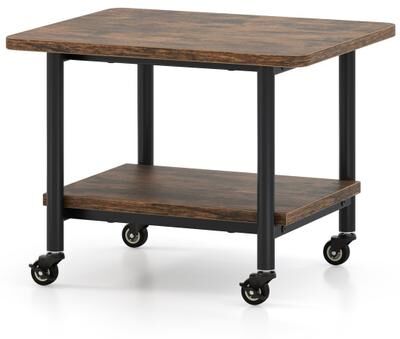
Multicon Wholesale Hub Compact Corner Laptop Work Desk, Small Spaces Rolling Computer Desk, Printer Table With Storage Compact Corner Laptop Work Desk, Small Spaces Rolling Computer Desk, Printer Table With StorageMaximize your workspace with this small spaces rolling computer desk, designed to provide efficient storage and mobility without compromising style. Crafted with highquality E1compliant MDF panels and a durable metal frame, this compact yet...139,97 $*Shipping: 0,00 $Secure redirect to the provider
-
Inspired Finds Translucent Mesh Nylon Storage Bag Portable Foldable Organizer For Travel & Stationery Translucent Mesh Nylon Storage Bag Portable Foldable Organizer For Travel & StationeryStay organized on the go with this translucent mesh nylon storage bag designed for travel, stationery, and everyday essentials. Its lightweight and foldable construction makes it perfect for holding tickets, cables, pens, cosmetics, and small...34,99 $*Shipping: 0,00 $Secure redirect to the provider
-
PRiME Metal Desktop Storage Basket Photocard And Stationery Organizer yellowClear the clutter and create a space that feels calmer, cleaner, and easier to use. This stylish desktop storage basket keeps everyday essentials neatly grouped while staying conveniently within reach. Its open metal design makes it a practical...34,97 $*Shipping: 0,00 $Secure redirect to the provider



-
What is the difference between L-tartaric acid and D-tartaric acid?
L-tartaric acid and D-tartaric acid are mirror-image isomers of each other, known as enantiomers. The main difference between them is their spatial arrangement of atoms. L-tartaric acid has a left-handed configuration, while D-tartaric acid has a right-handed configuration. This difference in configuration gives them different properties, such as their ability to rotate plane-polarized light in opposite directions. Despite their differences, they have similar chemical and physical properties. **
-
Why is meso-tartaric acid optically inactive?
Meso-tartaric acid is optically inactive because it has a plane of symmetry that divides the molecule into two identical halves. This means that the two chiral centers in meso-ttartaric acid are arranged in such a way that the molecule is superimposable on its mirror image. As a result, the molecule does not rotate the plane of polarized light and is therefore optically inactive. **
-
How does the protolysis of tartaric acid (C4H6O6) occur?
The protolysis of tartaric acid occurs when it reacts with water to donate a proton (H+) to the water molecule, forming the conjugate base of tartaric acid and a hydronium ion (H3O+). This reaction can be represented as C4H6O6 + H2O → C4H5O6- + H3O+. The resulting conjugate base of tartaric acid is called tartrate ion (C4H5O6-), which is a weak base. **
-
Why is the IUPAC name for tartaric acid and citric acid?
The IUPAC names for tartaric acid and citric acid are 2,3-dihydroxybutanedioic acid and 2-hydroxypropane-1,2,3-tricarboxylic acid, respectively. These names are used to provide a systematic and unique way to identify these organic compounds based on their chemical structure. The IUPAC names for these acids help to accurately describe the arrangement of atoms in their molecules, making it easier for scientists to communicate and work with these compounds in a precise manner. **


What is the reaction equation for the formation of tartaric acid?
The reaction equation for the formation of tartaric acid is as follows: C4H6O6 + 2 KOH → K2C4H4O6 + 2 H2O This reaction involves the reaction of potassium hydrogen tartrate (C4H6O6) with potassium hydroxide (KOH) to form potassium tartrate (K2C4H4O6) and water (H2O). This reaction is a neutralization reaction, where an acid and a base react to form a salt and water. **
Why is the IUPAC nomenclature for tartaric acid and citric acid?
The IUPAC nomenclature for tartaric acid and citric acid is used to provide a systematic and standardized way to name these organic compounds based on their chemical structure. This helps to avoid confusion and ensure clear communication among scientists and researchers when referring to these specific acids. Additionally, the IUPAC nomenclature follows specific rules and conventions that help to accurately describe the molecular composition of these acids. **
Top-Angebote
Products related to Tartaric:
-
Youfap Market Pen Holder Stationery Holder, Cute Cat Paw Desk Organizer For Office blueOrganize Your Space with Style The Lovely Cat Pawshaped Desk Pen Holder is a charming and functional addition to your home or office. Designed with a large capacity, this stationery holder provides ample space for all your pens, markers, and other...31,97 $*Shipping: 0,00 $Secure redirect to the provider
-
Multicon Wholesale Hub Compact Corner Laptop Work Desk, Small Spaces Rolling Computer Desk, Printer Table With Storage Compact Corner Laptop Work Desk, Small Spaces Rolling Computer Desk, Printer Table With StorageMaximize your workspace with this small spaces rolling computer desk, designed to provide efficient storage and mobility without compromising style. Crafted with highquality E1compliant MDF panels and a durable metal frame, this compact yet...139,97 $*Shipping: 0,00 $Secure redirect to the provider
-
Inspired Finds Translucent Mesh Nylon Storage Bag Portable Foldable Organizer For Travel & Stationery Translucent Mesh Nylon Storage Bag Portable Foldable Organizer For Travel & StationeryStay organized on the go with this translucent mesh nylon storage bag designed for travel, stationery, and everyday essentials. Its lightweight and foldable construction makes it perfect for holding tickets, cables, pens, cosmetics, and small...34,99 $*Shipping: 0,00 $Secure redirect to the provider
-
Is tartaric acid halal?
Yes, tartaric acid is considered halal. It is a naturally occurring organic acid found in many fruits, including grapes. It is commonly used in food and beverages as an acidulant and flavoring agent. As long as it is derived from permissible sources and does not contain any haram (forbidden) ingredients, tartaric acid is considered halal for consumption. **
-
What is tartaric acid?
Tartaric acid is a naturally occurring organic acid found in many fruits, particularly in grapes. It is commonly used in the food and beverage industry as a flavoring agent, preservative, and acidity regulator. Tartaric acid is also used in the production of wine to control the acidity and pH levels, as well as to prevent crystallization of potassium bitartrate. Additionally, it is used in the pharmaceutical and cosmetic industries for various purposes. **
-
What is the difference between L-tartaric acid and D-tartaric acid?
L-tartaric acid and D-tartaric acid are mirror-image isomers of each other, known as enantiomers. The main difference between them is their spatial arrangement of atoms. L-tartaric acid has a left-handed configuration, while D-tartaric acid has a right-handed configuration. This difference in configuration gives them different properties, such as their ability to rotate plane-polarized light in opposite directions. Despite their differences, they have similar chemical and physical properties. **
-
Why is meso-tartaric acid optically inactive?
Meso-tartaric acid is optically inactive because it has a plane of symmetry that divides the molecule into two identical halves. This means that the two chiral centers in meso-ttartaric acid are arranged in such a way that the molecule is superimposable on its mirror image. As a result, the molecule does not rotate the plane of polarized light and is therefore optically inactive. **
Similar search terms for Tartaric
-
PRiME Metal Desktop Storage Basket Photocard And Stationery Organizer yellowClear the clutter and create a space that feels calmer, cleaner, and easier to use. This stylish desktop storage basket keeps everyday essentials neatly grouped while staying conveniently within reach. Its open metal design makes it a practical...34,97 $*Shipping: 0,00 $Secure redirect to the provider
-
Uplift Treasures Mini Transparent Plastic Stationery Storage Box Organizer lProduct Description Keep your small essentials neatly sorted with this Mini Transparent Plastic Storage Box Organizer. Designed for stationery, stickers, manuals, small tools, and office supplies, this compact case helps eliminate clutter and keeps...39,97 $*Shipping: 0,00 $Secure redirect to the provider
-
Youfap Market Pen Holder Stationery Holder, Cute Cat Paw Desk Organizer For Office pinkOrganize Your Space with Style The Lovely Cat Pawshaped Desk Pen Holder is a charming and functional addition to your home or office. Designed with a large capacity, this stationery holder provides ample space for all your pens, markers, and other...31,97 $*Shipping: 0,00 $Secure redirect to the provider
-
How does the protolysis of tartaric acid (C4H6O6) occur?
The protolysis of tartaric acid occurs when it reacts with water to donate a proton (H+) to the water molecule, forming the conjugate base of tartaric acid and a hydronium ion (H3O+). This reaction can be represented as C4H6O6 + H2O → C4H5O6- + H3O+. The resulting conjugate base of tartaric acid is called tartrate ion (C4H5O6-), which is a weak base. **
-
Why is the IUPAC name for tartaric acid and citric acid?
The IUPAC names for tartaric acid and citric acid are 2,3-dihydroxybutanedioic acid and 2-hydroxypropane-1,2,3-tricarboxylic acid, respectively. These names are used to provide a systematic and unique way to identify these organic compounds based on their chemical structure. The IUPAC names for these acids help to accurately describe the arrangement of atoms in their molecules, making it easier for scientists to communicate and work with these compounds in a precise manner. **
-
What is the reaction equation for the formation of tartaric acid?
The reaction equation for the formation of tartaric acid is as follows: C4H6O6 + 2 KOH → K2C4H4O6 + 2 H2O This reaction involves the reaction of potassium hydrogen tartrate (C4H6O6) with potassium hydroxide (KOH) to form potassium tartrate (K2C4H4O6) and water (H2O). This reaction is a neutralization reaction, where an acid and a base react to form a salt and water. **
-
Why is the IUPAC nomenclature for tartaric acid and citric acid?
The IUPAC nomenclature for tartaric acid and citric acid is used to provide a systematic and standardized way to name these organic compounds based on their chemical structure. This helps to avoid confusion and ensure clear communication among scientists and researchers when referring to these specific acids. Additionally, the IUPAC nomenclature follows specific rules and conventions that help to accurately describe the molecular composition of these acids. **
* All prices are inclusive of VAT and, if applicable, plus shipping costs. The offer information is based on the details provided by the respective shop and is updated through automated processes. Real-time updates do not occur, so deviations can occur in individual cases. ** Note: Parts of this content were created by AI.